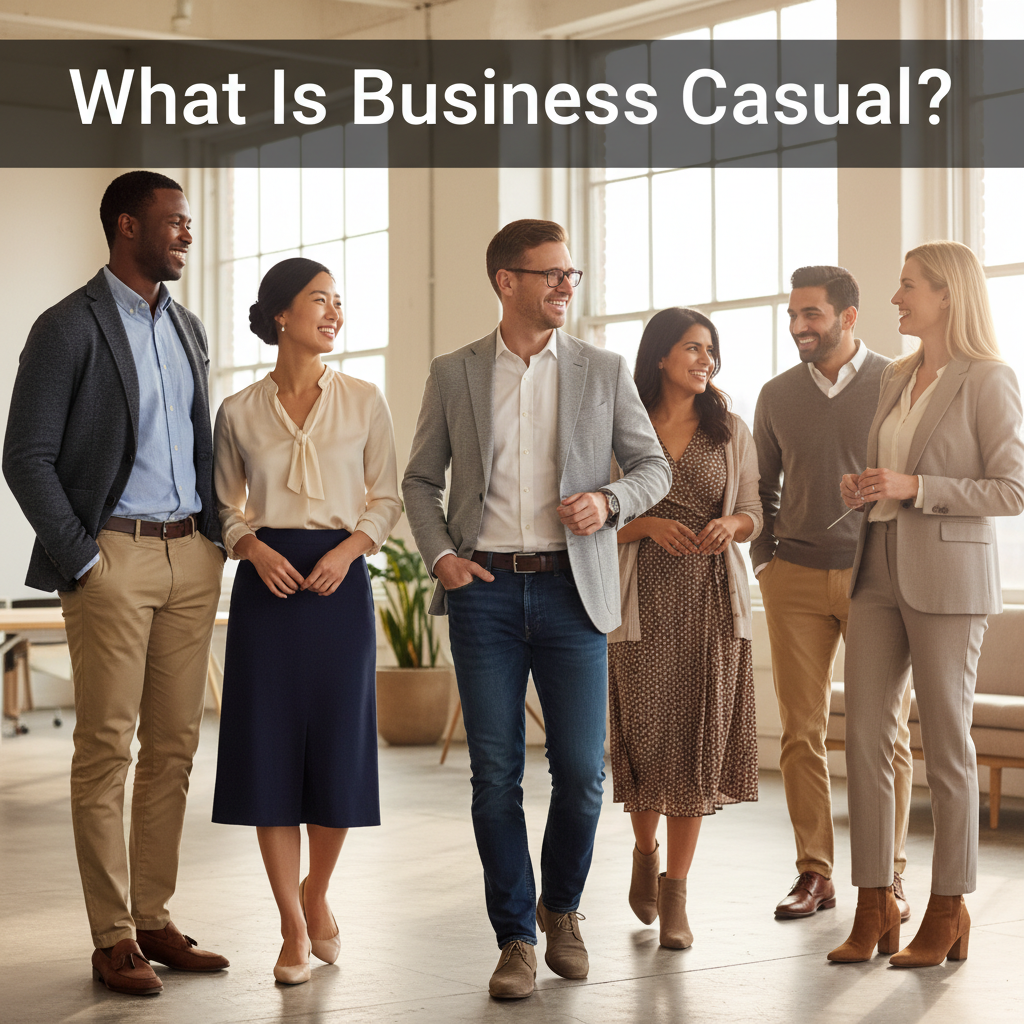
Understanding Business Casual: What It Means in 2026
Defining Business Casual in Today’s Hybrid Work Environment
Business casual is a way of dressing at work that is not formal but still looks professional. In 2026, business casual often means wearing clothes that are neat, clean, and comfortable. This can be important because many people work both at the office and from home. Business casual fits both styles.
How Business Casual Has Evolved Across Industries
In the past, offices were very strict about what people wore. Today, some workplaces like tech companies are more relaxed. Banks and law firms might still want you to dress a bit more formally. It all depends on what kind of office or industry you work in. The idea is to look put-together, not too casual, and professional enough for meetings and teamwork.
Key Differences: Business Casual vs. Business Formal vs. Smart Casual
- Business Casual: Neat shirts, slacks, skirts, and clean shoes—no ties or suits needed.
- Business Formal: Suits, ties, dress shoes, skirts, and blazers—everything matches and is more traditional.
- Smart Casual: Relaxed and fashionable, like jeans with a blazer, but still tidy and not too bold.
Quick Reference: Business Casual Dress Code Checklist
Approved Staples for Men
- Button-down shirts and polos
- Chinos or dress pants
- Blazers (optional)
- Clean loafers, oxfords, or dress sneakers
Approved Staples for Women
- Blouses or simple tops
- Knee-length skirts or tailored pants
- Cardigans or plain blazers
- Flats, loafers, ankle boots, or modest heels
What’s Never Business Casual: Items to Avoid in 2026
- Ripped jeans, shorts, or sweatpants
- T-shirts with slogans, graphics, or logos
- Flip-flops, slides, or worn-out sneakers
- Hats (except for religious reasons)
- Revealing or very tight clothing
How to Build a Business Casual Wardrobe That Works for You
Step 1: Assessing Your Office Culture and Dress Code
- Ask HR or your boss if there is a dress code.
- Observe what your coworkers wear, especially those in similar roles.
- Look for signs in your office or emails about dress expectations.
Step 2: Versatile Pieces for Building Your Capsule Wardrobe
- Choose neutral colors like black, navy, gray, and white. These mix easily.
- Pick tops and bottoms you can wear in different ways.
- Buy layers, like cardigans and blazers, for changing weather or meetings.
Step 3: Shopping Smart: 2026’s Most Adaptable Business Casual Brands
- Look for brands known for comfort and style.
- Check online reviews for fit and durability.
- Mix a few quality items with basics to save money.
Decoding Business Casual by Industry and Region
Tech, Finance, Creative, and More: Dress Code Differences Explained
- Tech: Usually more relaxed. Jeans with a nice shirt can be fine.
- Finance: Dress shirts, dress pants, and often blazers. Keep things classic.
- Creative: More personal style is allowed. Try bold colors or patterns, but keep it professional.
US vs. UK vs. Asia-Pacific: Regional Expectation Variations
- US: Business casual is common. Some places are more relaxed.
- UK: Usually one step more formal. Jackets and matching outfits are popular.
- Asia-Pacific: Some offices expect more formal looks, especially in finance. Always check local traditions.
Remote and Hybrid Trends: Dressing for Zoom vs. Office
- For online meetings: Focus on tops like shirts and blouses. Keep backgrounds neat.
- For office days: Complete the look with matching pants and shoes.
- Some companies have “dress for your day” policies, so check before you log in or show up.
Interactive How-To: Business Casual Outfit Decision Guide
Choose Your Role: Practical Outfits for Managers, Creatives, Sales, and Interns
- Managers: Blazers, neat shirts, and polished shoes.
- Creatives: Add color or stylish shoes, but stay professional.
- Sales: Choose bright shirts or blouses and simple jewelry to look sharp.
- Interns: Go simple and safe—neat shirt and pants, comfortable shoes.
Plan Your Week: Visual Mix-and-Match Outfit Templates
- Pick 3 tops and 3 bottoms. Mix to create up to 9 outfits.
- Add 2 jackets or sweaters for extra options.
- Use different shoes and accessories to change the look.
Adapting for Weather and Season
- Hot days: Pick light fabrics like cotton. Try short sleeves but no tank tops.
- Cold weather: Add layers such as cardigans or sweaters. Choose closed shoes.
- Keep an extra sweater or scarf at your desk for surprise temperature changes.
Real-World Scenarios: How to Navigate Tricky Business Casual Moments
Business Casual for Conferences, Interviews, and After-Work Events
- Conferences: Choose your sharpest business casual.
- Interviews: Slightly more formal—maybe add a blazer.
- After-work: Layer on a jacket or swap shoes to update your look.
Transitioning from Day to Night Without Overdressing
- Switch to a nicer jacket or add bold jewelry.
- Change shoes to something more stylish or clean.
- Reapply makeup or refresh your hair if needed.
Handling Dress Code Mistakes Gracefully
- If you feel underdressed, keep a blazer at your desk just in case.
- If someone tells you your outfit doesn’t fit the business casual dress code, thank them and ask for advice.
- Remember, everyone makes mistakes—learn and move on.
FAQs: Common Business Casual Questions Answered (2026 Edition)
Can I wear sneakers or jeans?
Many offices now allow clean, plain sneakers and dark jeans. But always check your company’s dress code first.
What if my boss dresses differently?
Dress for your role, not just like your boss. If unsure, match the usual dress code seen in your workplace or ask HR for advice.
How to ask HR about ambiguous dress codes
Ask HR with a simple question, like: “What does business casual mean here? Are there things I should avoid?” HR respects employees who want to look right for their jobs.
Expert Tips and Final Thoughts on Mastering Business Casual in 2026
- Always keep your business casual clothes clean and pressed.
- If unsure, dress a little more formal at first. You can go more casual as you learn the office style.
- Update your wardrobe every year to match trends and workplace changes.
- Business casual dress code helps you look professional and feel confident at work.
Now you know what business casual means in 2026 and how to make it work for you. Start by choosing a few great pieces and watch how it boosts your confidence and helps you fit in at your workplace. Stay curious, keep learning, and enjoy building your unique business casual style!