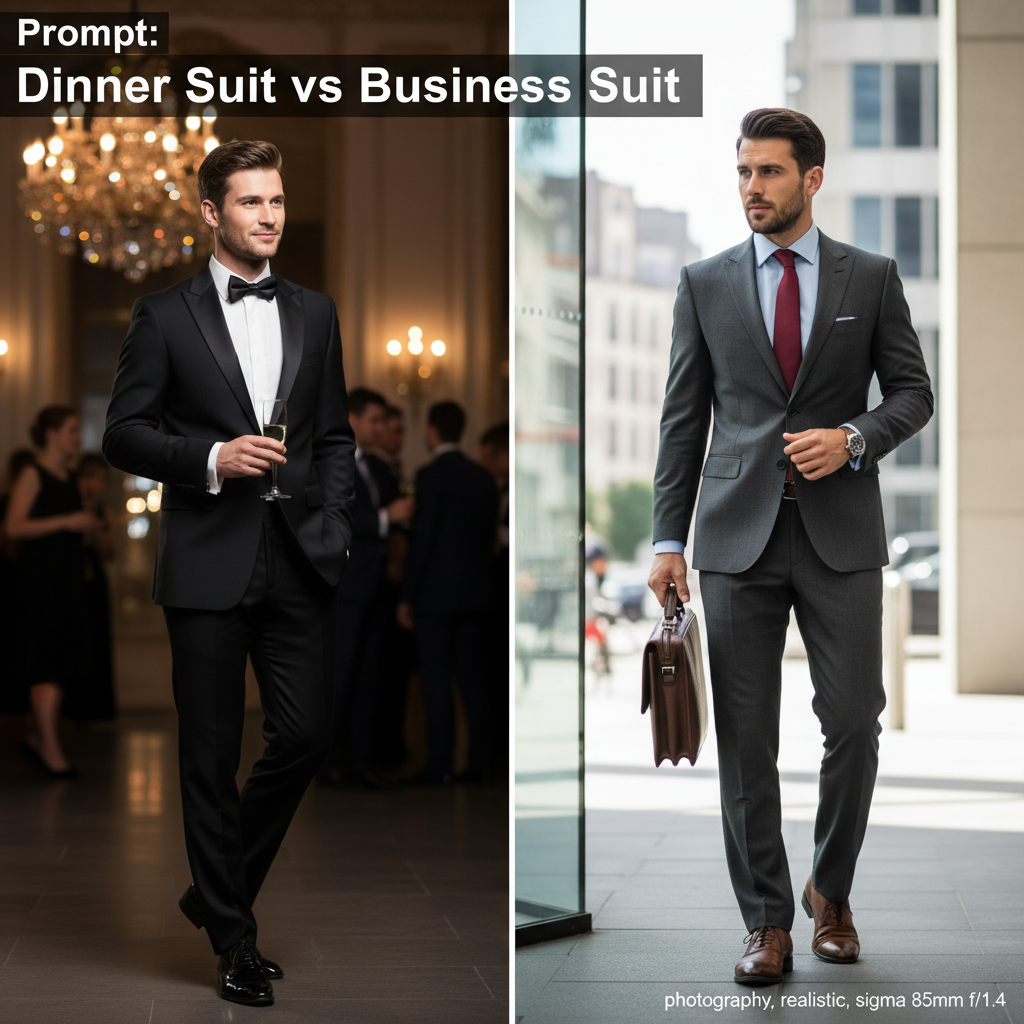
Dinner Suit vs Business Suit — At-a-Glance Comparison
What Is a Dinner Suit? Key Features and Visual Guide
A dinner suit, also known as a tuxedo, is formal evening wear. It is worn for smart events like banquets, proms, and weddings. Key features include:
- Jacket with satin lapels (often black or midnight blue)
- Matching trousers with a satin stripe
- Worn with a white dress shirt and a bow tie
- Usually paired with black formal shoes
- Worn at events after 6 PM
Dinner suits look sleek and classic, making you stand out at special evening occasions.
What Is a Business Suit? Key Features and Visual Guide
A business suit is most common in offices, meetings, and interviews. These suits are more versatile and designed for daytime wear. Key features include:
- Jacket and matching trousers, usually in blue, grey, or black
- Standard or notch lapels (not shiny)
- Dress shirt in different colors, worn with a necktie
- Leather shoes, often black or brown
- Suits most work or semi-formal events
Business suits help you look professional and confident in work settings.
Quick Reference Comparison Table (2026 Update)
| Feature | Dinner Suit (Tuxedo) | Business Suit |
|---|---|---|
| Main Use | Formal evening events | Business meetings, office wear |
| Common Colors | Black, Midnight Blue | Blue, Black, Grey |
| Lapel Type | Satin (shiny) | Regular (matte) |
| Shirt | White, with pleats | Various colors, no pleats |
| Tie Type | Bow tie | Necktie or no tie |
| Shoes | Shiny black leather | Black or brown leather |
How to Choose: A Step-by-Step Guide
Decision Flowchart—Which Suit Do You Need?
- Check the event time: Is it after 6 PM? If yes, continue to next step. If no, a business suit is usually best.
- Read the invitation: Does it mention “black tie”? If yes, you need a dinner suit.
- Consider the event type: Is it a wedding, formal dance, or gala? Dinner suit fits best. Is it for work, meetings, or job interview? Choose a business suit.
- Still unsure? Ask the host or look at previous event photos for dress clues.
2026 Dress Codes: Interpreting Invitations and Social Cues
Modern invitations use keywords:
- “Black Tie” — Always means a dinner suit (tuxedo)
- “Formal” or “Evening Wear” — Often means dinner suit, check with host if unsure
- “Business Formal” or “Business Attire” — Always a business suit
- “Smart Casual” — Casual suit or blazer, not a full business or dinner suit
Pay attention to location, time, and the people attending. If important guests or senior staff are present, it is safer to dress up.
Regional and Workplace Trends (UK, US, Australia)
- UK: Formal traditions are strong; black tie means dinner suit, business attire means business suit.
- US: Business suits are more common for daily wear. Some American schools or proms require dinner suits.
- Australia: Business suits are standard, but dinner suits are worn for fancy social or school events.
Always check regional practices before choosing your outfit.
Assembling the Perfect Outfit for Every Occasion
How to Style a Dinner Suit: Fabrics, Accessories, and Shoes
- Pick a dinner suit in black or midnight blue, with satin lapels.
- Choose a crisp, white dress shirt with a pleated or plain front.
- Add a black bow tie or, if allowed, a subtle colored one for a modern twist.
- Wear a formal waistcoat or cummerbund if required.
- Black socks and shiny black leather shoes will complete the look.
- Add cufflinks and a pocket square (optional) for extra style.
How to Style a Business Suit: Colors, Shirts, and Ties
- Choose a classic color: navy blue, charcoal grey, or black.
- Pick a dress shirt, usually light blue or white. Patterns are okay but should be simple.
- Select a tie that matches the shirt and suit. Solid colors are safest; subtle patterns also work.
- Wear black or brown leather shoes, polished for a smart finish.
- Add a belt that matches your shoes and a watch to look professional.
Mixing and Matching: When (and How) Can You Blend Elements?
- Avoid mixing dinner suit pieces with business suit pieces for formal events.
- For less formal work events, you can wear a smart blazer with business trousers.
- Never wear a bow tie with a business suit unless it is a themed event.
- Some accessories, like pocket squares or cufflinks, can be shared between both suits for a unique touch.
Real-Life Scenarios: Suiting Up for Modern Events
From Boardroom to Gala: What to Wear When Events Overlap
If you go from work to a formal evening event, bring a change of shirt and your dinner suit jacket and accessories. Many people keep a dinner suit at the office for special occasions. Shoes can be swapped quickly if needed.
Dress Code Dilemmas: Navigating Ambiguous Invitations
- If unsure, contact the event host politely and ask.
- Ask colleagues, search online for event photos, or check social media for style clues.
- In doubt, dress up: it is better to be slightly overdressed than too casual at formal events.
Success Stories: Readers’ Experiences and Lessons Learned
- Tom, 17: “Wearing my first dinner suit at a school prom made me feel confident and included.”
- Sara, 23: “Choosing the right business suit for interviews helped me get my first job after college.”
- Amir, 29: “Not asking about dress code made me stand out—in a bad way! I learned to always check.”
Expert Tips: Avoiding Common Suit Mistakes in 2026
Style Professionals Share Their Essential Advice
- Get your suit fitted—ill-fitting suits look sloppy.
- Keep it simple: Classic is always safe, avoid loud colors for serious events.
- Polished shoes are as important as your suit.
Frequently Overlooked Details That Make a Difference
- Iron shirts properly—wrinkles ruin even the best suits.
- Check buttons, zippers, and hem lines before each wear.
- Match your socks to your trousers for a streamlined look.
Year-Round Suit Maintenance and Storage Tips
- Store suits on wide, sturdy hangers to keep their shape.
- Clean suits as needed—don’t over-wash, as this wears out the fabric.
- Use garment bags for protection from dust and moths.
- Rotate suits so you don’t wear out one too quickly.
FAQ: Your Top Questions About Dinner Suits vs Business Suits Answered
- Q: Can I wear a dinner suit to work?
A: No, dinner suits are for evening events only. Always choose a business suit for work settings. - Q: Do I need to buy both suits?
A: If you attend both business and formal events, owning both is best, but renting a dinner suit is possible for rare occasions. - Q: What’s the difference between a blazer and a suit jacket?
A: A blazer is less formal and can be mixed with trousers. A suit jacket is part of a matched set. - Q: Are colored suits okay?
A: For business suits, stick to navy, grey, or black. For dinner suits, only black or midnight blue is advised. - Q: Is a bow tie required with a dinner suit?
A: Yes, unless a creative dress code says otherwise.
Summary: Key Points and Next Steps
- Know the difference: Dinner suits are for formal evening events, business suits are for work.
- Always check invitations and traditions before choosing what to wear.
- Style each suit simply, keep shoes and accessories polished.
- Ask for help if unsure—better safe than sorry!
- Care for your suits so they last and stay looking sharp.
Now you know how to choose, style, and care for your dinner suit vs business suit. Use this guide whenever you have an important event or workplace occasion. Dressing right will help you feel confident and make a strong impression!